
Self-confessed coffee addict and SOMA Analytics writer Peter Haywood takes on the world of functional mushrooms blended with matcha. As he discovers the best mushroom matcha powders on the market, he also uncovers some unintended benefits. Find our more below…
Why I Started Putting Mushrooms In My Matcha
I used to be a three-coffees-before-lunch person. Don’t judge me.
It worked, until it didn’t. The buzz would hit around 9am, hold for maybe an hour, then I’d be staring at my screen by 11 wondering why my brain had quietly clocked off without telling me. A second cup just delayed the inevitable. A third one gave me the shakes and made me weirdly snappy with anyone who dared ask me a simple question before noon.
So when a friend mentioned she’d swapped her morning coffee for something called “mushroom matcha,” I did the thing most of us do, I nodded, said “oh nice,” and quietly assumed she’d lost the plot a bit. Mushrooms. In tea. Yeah right!
A few months and a genuinely embarrassing number of pouches later, I’ve eaten my words (not literally – that would rather defeat the purpose). I’ve worked my way through more mushroom matchas than I’d like to admit, landed on a proper favourite, and worked out exactly which ones aren’t worth your money. And in this article, I’ll be sharing the ones I love and the ones that I almost spat out on first sip.
One quick stat before we get going: matcha uses the whole ground tea leaf rather than just steeping it, which means you get the full hit of antioxidants and L-theanine that a regular cup of green tea simply can’t touch.
Add a properly dosed mushroom blend on top of that, and you’ve got something worth building a morning around – not just another wellness fad that’ll be gone by next spring.

Quick Verdict: Our No.1 Mushroom Matcha
Matcha Flow has everything I look for in a high quality supplement but it comes in a delicious drink form. It uses organic ceremonial grade matcha plus another 8 functional ingredients (all transparently dosed) including lions mane, tremella and reishi mushroom.
The vitamin and adaptogens included are very welcome and had an instant impact for our reviewer. It compares well on price to competitors and blows them all away in terms of the overall blend, taste and impact.
So What’s Actually In A Mushroom Matcha?
Let’s clear this up first, because I had the same confused reaction everyone has the first time they hear “mushroom” and “matcha” in the same sentence.
A mushroom matcha is, at its simplest, ceremonial-grade (if good quality) Japanese matcha blended with functional mushroom extracts – usually some mix of lion’s mane, reishi, tremella, or cordyceps. The better ones also throw in an adaptogen like ashwagandha, a bit of MCT oil for sustained energy, and often a few B vitamins for good measure.
Here’s why it actually works, rather than just being two wellness buzzwords smushed together for a TikTok trend. Matcha naturally contains both caffeine and L-theanine. The caffeine wakes you up; the L-theanine takes the edge off so you don’t get that jittery, heart-racing feeling, which is why matcha energy feels calmer and more even than a flat white, despite a typical serving still carrying around 70mg of caffeine (roughly two-thirds of what you’d get from a regular coffee).
Layer the mushrooms on top and you’re adding things matcha alone doesn’t really do. Lion’s mane for focus and that “brain fog lifting” sensation, reishi for taking the edge off stress, tremella for, believe it or not, your skin.
Not always an easy combination to get right, mind you. I’ve had versions that taste like wet soil. More on that below.
Before You Buy: What Separates The Good Stuff From The Fluff
I’ll save you some of the trial and error I went through, because there’s a fair bit of fluff in this category dressed up as substance.
A few things I now check before handing over my card:
- Organic certification — not a dealbreaker on its own, but a decent signal of overall quality control
- Real fruiting-body extract, not mycelium-on-grain filler — cheaper brands bulk out their “mushroom powder” with grain that’s been grown using mushroom mycelium, which is a fraction as potent as the actual fruiting body
- Actual dosages on the label — if a brand just says “proprietary mushroom blend” with no numbers attached, that’s usually a brand hiding something (or hiding very little)
- Ceremonial-grade matcha, not culinary-grade — culinary grade is fine for baking, less fine for a daily energy ritual
- Subscription terms — I got caught out once by a “one-time discount” that quietly auto-renewed at full price three weeks later. Read the small print.
That last one stung a bit, if I’m honest. Keep this checklist in mind as you read through the picks below — it’ll save you from a few of the duds I had to find out about the hard way.
The Best Mushroom Matcha Powders I’d Actually Buy Again
This is the bit you’re here for. Ranked on taste, how I actually felt drinking each one daily for weeks at a time, and – the real test – whether I’d hand over my own money again.
Best Overall: Matcha Flow
Matcha Flow is the one I keep coming back to. At this point it’s properly embedded in my morning routine.
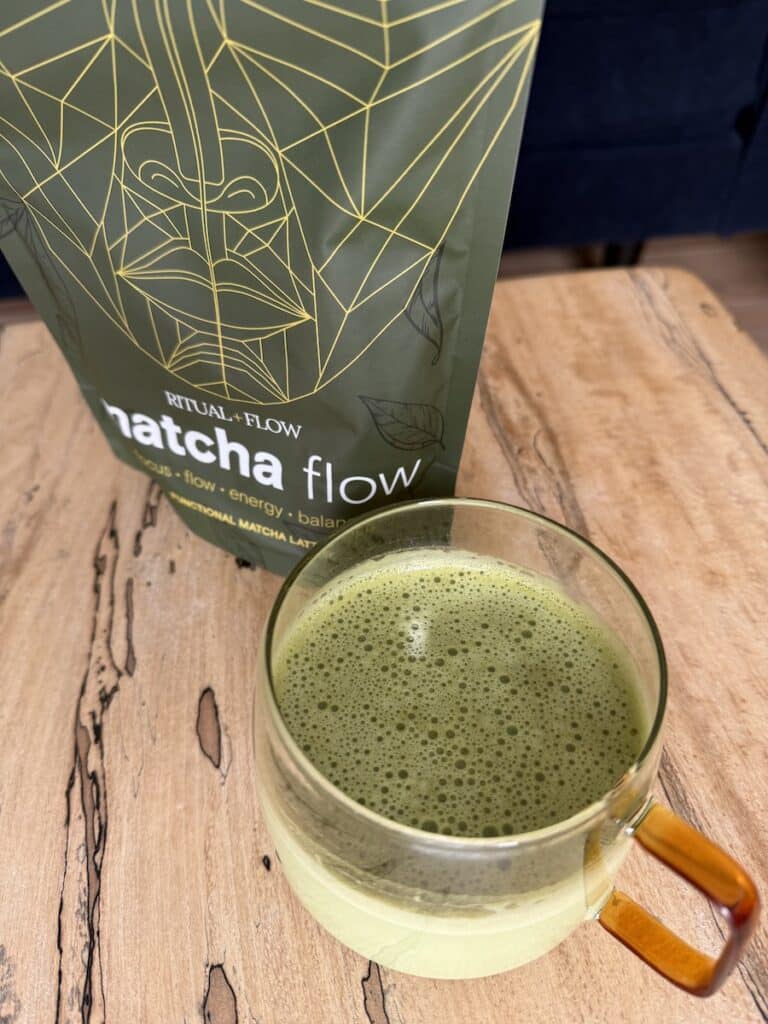
The ingredient list reads like someone actually thought about what they were doing, rather than chasing a trend: 2,100mg of organic ceremonial matcha, 800mg of Lion’s Mane, 1,000mg of Tremella, 300mg of Reishi, 200mg of KSM-66 ashwagandha (the clinically studied, more potent form), 2,000mg of MCT oil, a bit of maca root, and a full day’s worth of B5, B6 and B12. That’s eight active ingredients with their dosages printed right there on the label – which, once you start looking around this category, you realise is rarer than it ought to be.
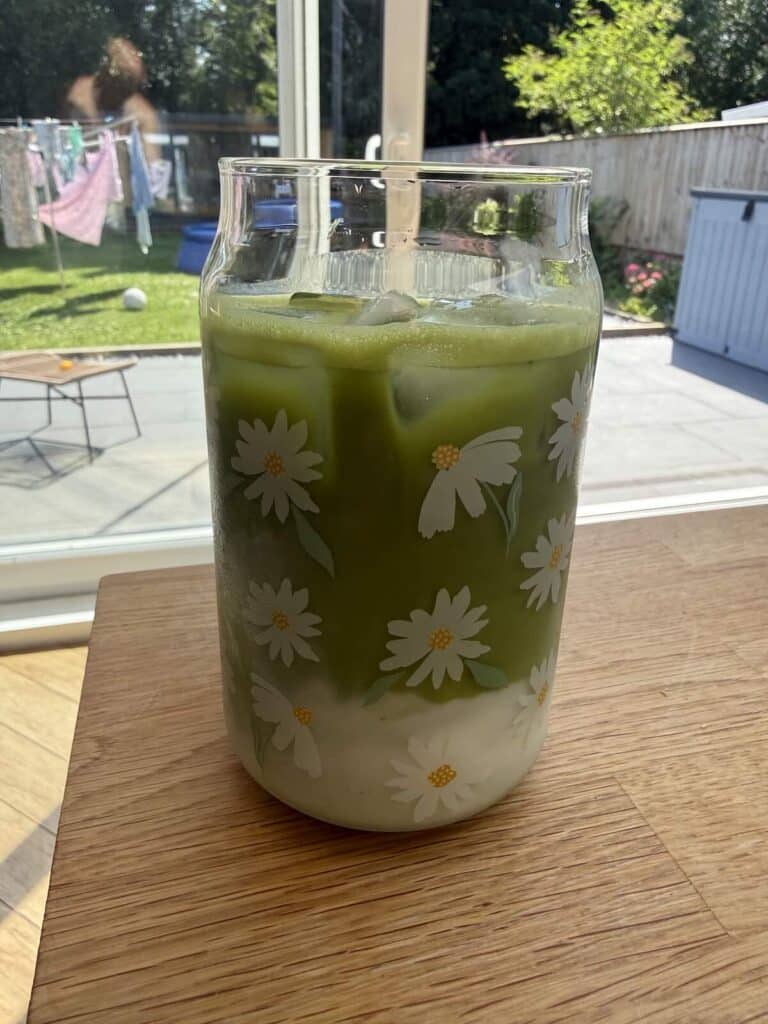
As a self-confessed coffee addict, I genuinely didn’t expect to enjoy this as much as I do. It’s rich and earthy without ever tipping into bitter, which a lot of matchas — mushroom or otherwise — get badly wrong. I make mine iced, with oat milk and the smallest dash of honey, and the energy properly holds. I’m talking five to six hours, no late-morning slump. A couple of months in, I’ve also noticed my stomach’s been a fair bit more settled day to day. Can’t promise that’s purely down to the matcha, but I haven’t changed anything else.
It’s not the cheapest. You’re looking at around £1.65 a serving, dropping to roughly £1.30 if you go for the subscription or as low as £1.10 per serving on their multi-pack subscription. But for what’s actually in the pack, and given they back it with a 60-day money-back guarantee, I think it earns its price tag.
Best Texture & Taste: Cuppa
If Matcha Flow wins on substance, Cuppa wins on sheer drinkability. The colour alone is something to behold, proper vivid green, none of that dull brownish tinge I got from a couple of the others on this list.
It’s got a solid 1,000mg each of lion’s mane and cordyceps, dissolves without a hint of grittiness (some of the cheaper ones genuinely need sieving, which isn’t a sentence I expected to write about a hot drink), and there’s a savoury, slightly nutty flavour that doesn’t taste remotely mushroomy. If the “mushroom” part is what’s putting you off trying any of this, start here.
Best For Mushroom Variety: Ryze
Ryze throws the kitchen sink at this one with cordyceps, lion’s mane, reishi, shiitake, turkey tail, and king trumpet, all in a single tub. I went in expecting an overwhelming, swampy flavour. Didn’t get one. It genuinely just tastes like a decent matcha, which surprised me given how much is going on underneath.

My one gripe: they’re not as upfront about exact mushroom dosages as some of the others here, which makes it harder to know precisely what you’re getting per cup and this for me is usually a deal breaker.
Best For Flavour Variations: Clevr Blends
Clevr’s SuperLatte blends lion’s mane, reishi and ashwagandha with a bit of probiotic support, and what sets it apart is the flavour range – honey lavender, honey pistachio, even a strawberry version. I did a side-by-side with my usual coffee-shop iced matcha out of curiosity, and Clevr’s held up better than expected, richer and creamier without being sickly.
It’s not quite as “clean” a flavour as Cuppa or Matcha Flow and the added ingredients shift the profile a fair bit, but if you want something that feels more like a treat than a supplement, this is worth a look.
Worth A Mention: Matcha Fuel
Not everything on this list gets a five-star love letter, and I want to be straight with you about that.
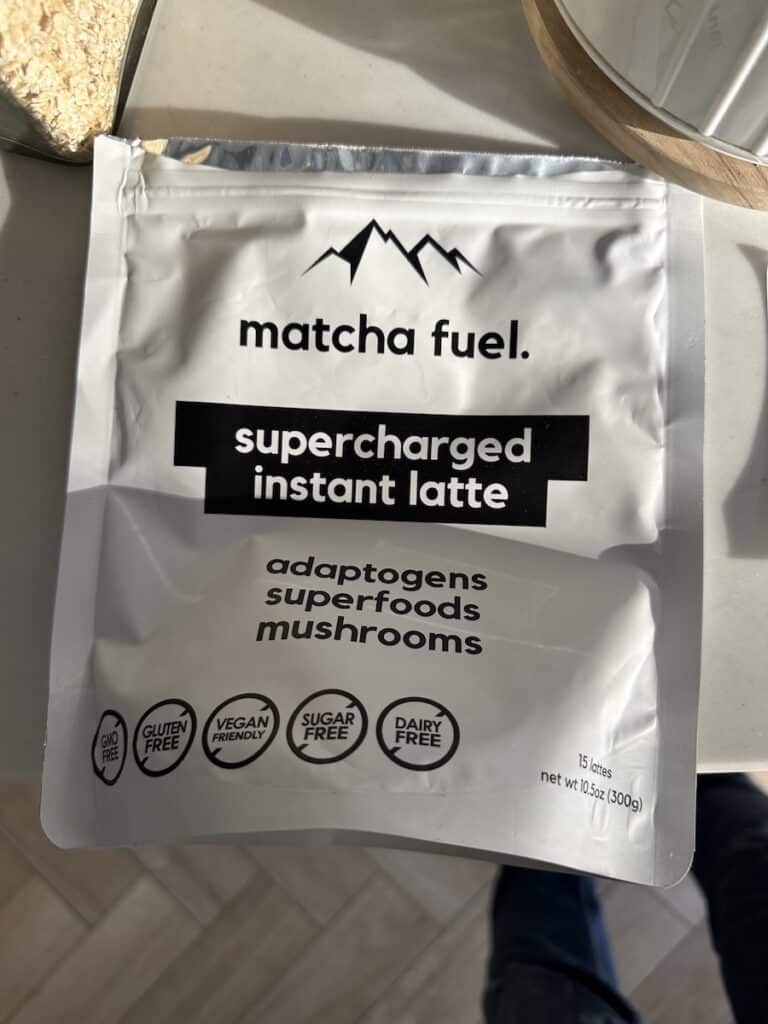
Matcha Fuel was actually my daily drink before I found Matcha Flow, and for a good while it did the job nicely. Decent energy, a reasonably balanced taste with a slightly earthy edge, and genuinely good results for months on end.
Where it lost me a bit was around the three-month mark, when the benefits seemed to plateau – I wasn’t feeling the same lift I had at the start. The taste also leans a touch more medicinal than some of the others here, and it took a good couple of weeks before I stopped noticing it. Solid product. Just not my first pick anymore.
Quick-Fire Mentions
A few others worth a passing mention, good and not-so-good:
- Om Mushroom Superfood — a clean, well-dosed immune-focused blend (2,000mg whole mushroom powder), better suited to anyone prioritising immunity over an energy kick
- Renude — a fun, monk-fruit sweetened flavour with a cinnamon edge, though it hides its mushroom dosages behind a “proprietary blend,” which knocked my trust in it a fair bit
- Everyday Dose — disappointing, if I’m honest. The collagen dose in this one is so high it drowns out both the matcha and the mushrooms, leaving you with something fairly bland for the price
Mushroom Matcha vs Your Usual Coffee (Or Plain Matcha)
Here’s the question I get asked most: is it actually better than coffee, or just different?
For me, it’s the crash that makes the difference. Coffee gives you a spike and a slump. A good mushroom matcha gives you a flatter, longer curve – slower up, slower down, and crucially, no 3pm wall to climb over. That’s the caffeine-plus-L-theanine combination doing the heavy lifting, with the mushrooms adding a bit of extra staying power on top.
But do you actually need the mushrooms, or would plain ceremonial matcha do just as well? Honestly, if you’re not dealing with brain fog, stress, or sluggish energy day to day, plain matcha might be all you need. If any of that sounds familiar though, the mushroom complex is where the real upgrade happens.
A Few Honest Caveats (Don’t Skip This Bit)
I’d rather be straight with you than oversell this.
Give your gut a couple of weeks to adjust. A bit of bloating or general “is this normal” feeling in the first few days isn’t unusual as your system gets used to the mushroom extracts as it tends to settle. And if you’re sensitive to caffeine, start with a half serving rather than diving straight into a full scoop.
If you’re pregnant, breastfeeding, or on any prescribed medication, especially anything affecting your immune system, have a proper chat with your GP before adding any of this into your routine. I’m not a doctor, and none of this is medical advice. Just what’s worked for me, personally, after a fair bit of trial and error.
How I Actually Make Mine
Quick and painless. Two scoops (about 11g) into the mug first. Then a small splash of hot water, frothed into a paste so you don’t end up with lumps. Top up with more hot water (or cold, if you’re going iced), then milk of your choice which is oat, for me, every single time. Finish with a quick froth and, if I’m feeling it, the smallest dash of honey.
Takes about two minutes. Less time than it takes the kettle to boil for a normal cup of tea, if we’re honest.
Ready To Find Your Flow?
I’m not going to tell you mushroom matcha is some miracle fix that’ll transform your life overnight. It won’t. What it will do, if you pick a properly formulated one, is give you steadier energy, a calmer kind of focus, and if you’re anything like me, it’s genuinely something to look forward to each morning instead of just fuel to get through it.
If you want a place to start, Matcha Flow is the one I’d point you towards first. Give it two weeks. See how you feel.
Your mug’s waiting.
